


Communication Sciences and Disorders Student Studies in South Africa
Being in Africa prepared me for something more, some way to make a difference in the world.
Being in Africa prepared me for something more, some way to make a difference in the world.

We often think about physical accessibility, for example, playgrounds having ramps or mulch that won’t get stuck in a wheelchair wheel. But a lot of people don’t think about those public spaces having accessible communication.
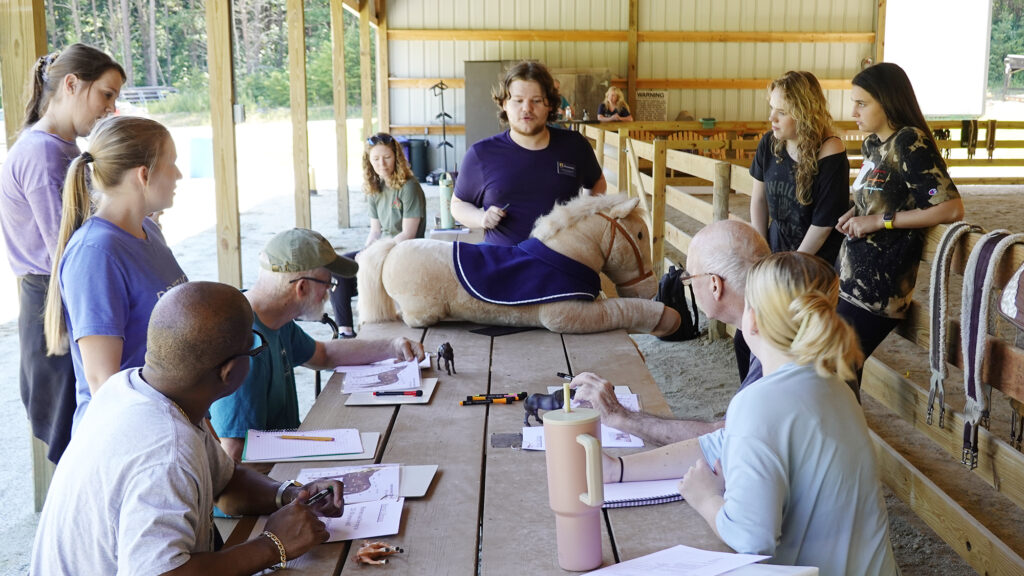
Larry Farrer sits astride a stately brown horse with white markings, holding his arms out perpendicular to the ground. His horse walks onto a low platform, then walks off, Farrer still holding his arms up. He has a wide grin on his face.
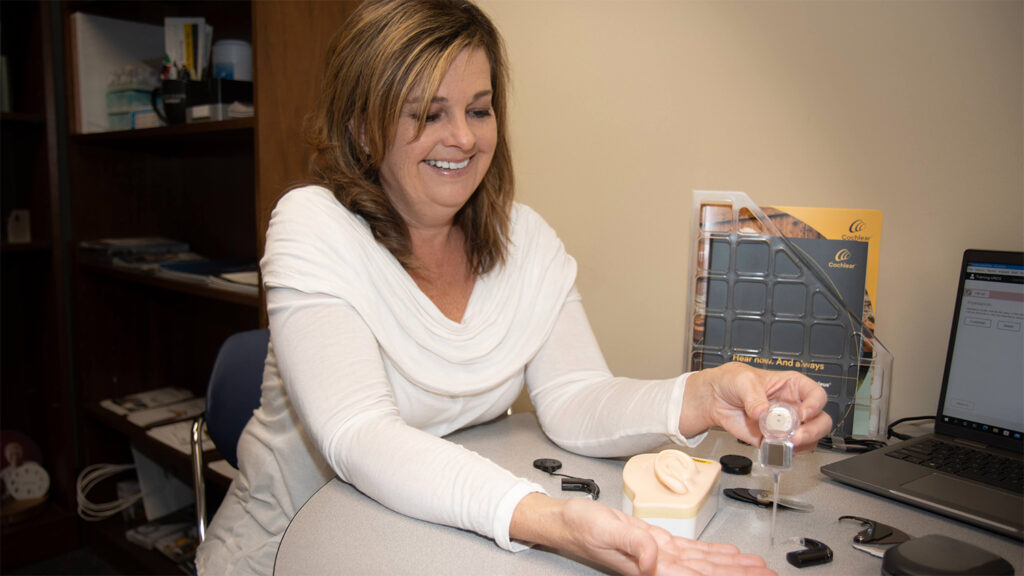
Untreated healing loss really starts to take away from society, it can lead to depression. Untreated hearing loss can lead to more falls, which can lead to more health concerns. It’s linked to cardiovascular disease, diabetes, and cognitive decline. Dr. Amy Myers, Department of Communication Sciences and Disorders
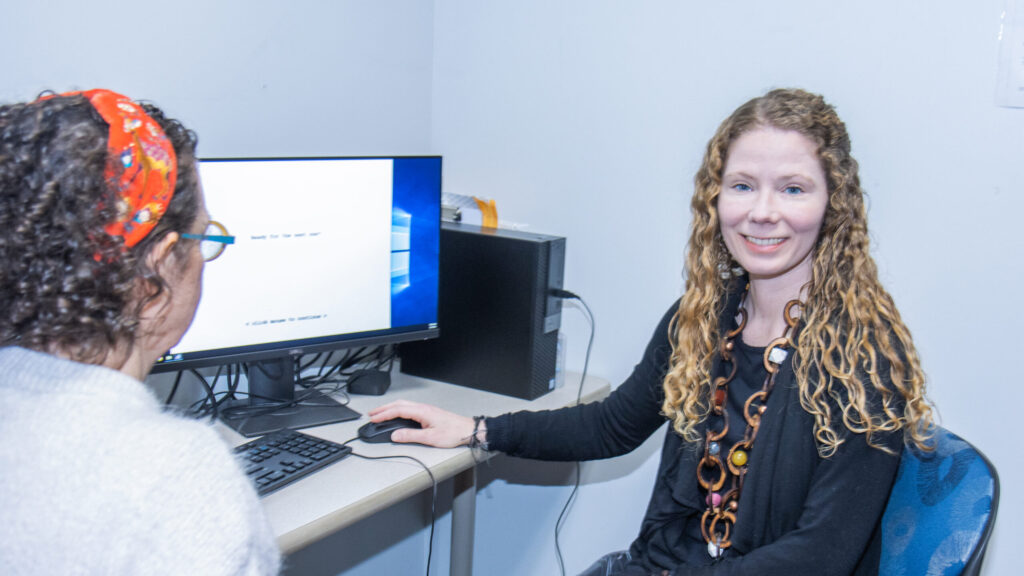
Women in science are celebrated internationally on Feb. 11, but at the UNCG School of Health and Human Sciences, women are involved in significant science and scientific leadership year-round. This research includes lab work, field work, independent study, interdisciplinary projects, and community partners.
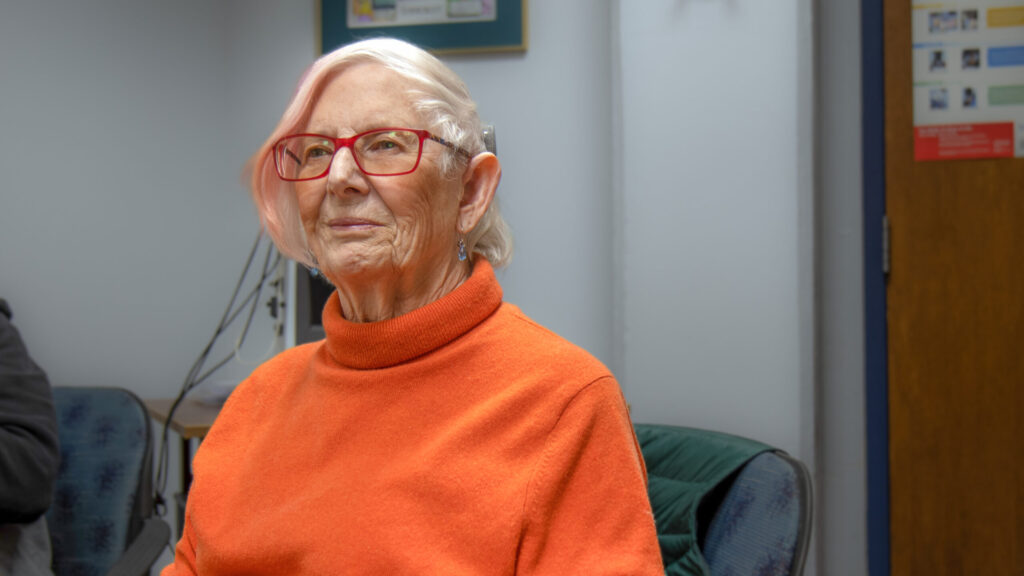
‘’Could you speak a little louder please?” I ask. “Would you repeat that sentence, please?” I ask. “What are you, deaf or something?” They’d ask. Yes, I am deaf, I said to myself, but have been able to disguise it. Dr. Elizabeth Chiseri-Strater

The noises that trigger someone with Misophonia don’t have to be loud, according to Lisa Fox-Thomas, Ph.D., a professor of audiology and assistant director at the University of North Carolina Greensboro Speech and Hearing Center, who treats people with Misophonia. In fact, they can be as quiet as someone chewing or the hum of a fluorescent light.
Speech problems usually follow from strokes that occur on the left side of the brain. Because of that, Communication Sciences & Disorders alumna (’14) Dr. Jamilia Mijnga explained, clinical education, practice, and research have been on the overt communication impairments from left hemisphere stroke, leaving a whole other half of the brain and population under identified and underserved.

Emily Hamuka, a clinical educator in the Communication Sciences and Disorders Department at UNC Greensboro, was once asked what she would do if she could design any summer camp. From that question – the Sports and Language Camp was formed.

Bilingualtek project integrates language and science learning. “Language is so important for science learning because in order to even think about science concepts, you also need the words.” Sitting criss-cross in a circle, five preschoolers reach out to touch pieces of fabric their teacher spreads in front of them.